The Future of AI in Talent Acquisition
The Future of AI in Talent Acquisition: Resumes, Interviews, & More
The field of talent acquisition is undergoing a significant transformation with the integration of artificial intelligence (AI). From automating repetitive tasks to providing deep insights into candidate profiles, AI is reshaping how organizations attract, assess, and hire talent. This blog explores the future of AI in talent acquisition, focusing on its impact on resumes, interviews, and other critical aspects of the recruitment process.
1. AI in Resume Screening: Enhancing Efficiency and Accuracy
Overview:
One of the most time-consuming aspects of talent acquisition is resume screening. Traditionally, recruiters sift through hundreds of resumes to identify suitable candidates. AI-driven tools are changing this by automating the screening process, improving both efficiency and accuracy.
Statistics:
- According to a report by LinkedIn, 67% of hiring managers say AI has helped save time in the recruitment process.
- A study by Ideal found that AI-powered resume screening tools can reduce the time spent on screening resumes by up to 75%.
How It Works:
AI resume screening tools use natural language processing (NLP) and machine learning algorithms to analyze resumes and match them against job descriptions. These tools can identify keywords, assess experience and skills, and rank candidates based on their fit for the role.
Benefits:
- Efficiency: AI tools can screen resumes in a fraction of the time it takes a human recruiter, allowing talent acquisition teams to focus on more strategic tasks.
- Accuracy: By using predefined criteria, AI ensures that only the most relevant resumes are shortlisted, reducing the risk of human bias and oversight.
- Scalability: AI tools can handle large volumes of resumes, making them ideal for organizations with high recruitment demands.
Examples:
- HireVue: This platform uses AI to analyze resumes and match candidates to job openings based on their skills and experience.
- Pymetrics: By leveraging neuroscience and AI, Pymetrics matches candidates to roles where they are most likely to succeed, based on cognitive and emotional traits.
2. AI-Powered Interviews: Transforming Candidate Assessment
Overview:
Interviews are a critical part of the recruitment process, and AI is revolutionizing how they are conducted and analyzed. AI-powered interviews can provide a more objective and data-driven assessment of candidates.
Statistics:
- Research by Deloitte indicates that 33% of HR professionals believe AI can improve the interview process.
- According to HireVue, AI-driven interviews can reduce time-to-hire by up to 90%.
How It Works:
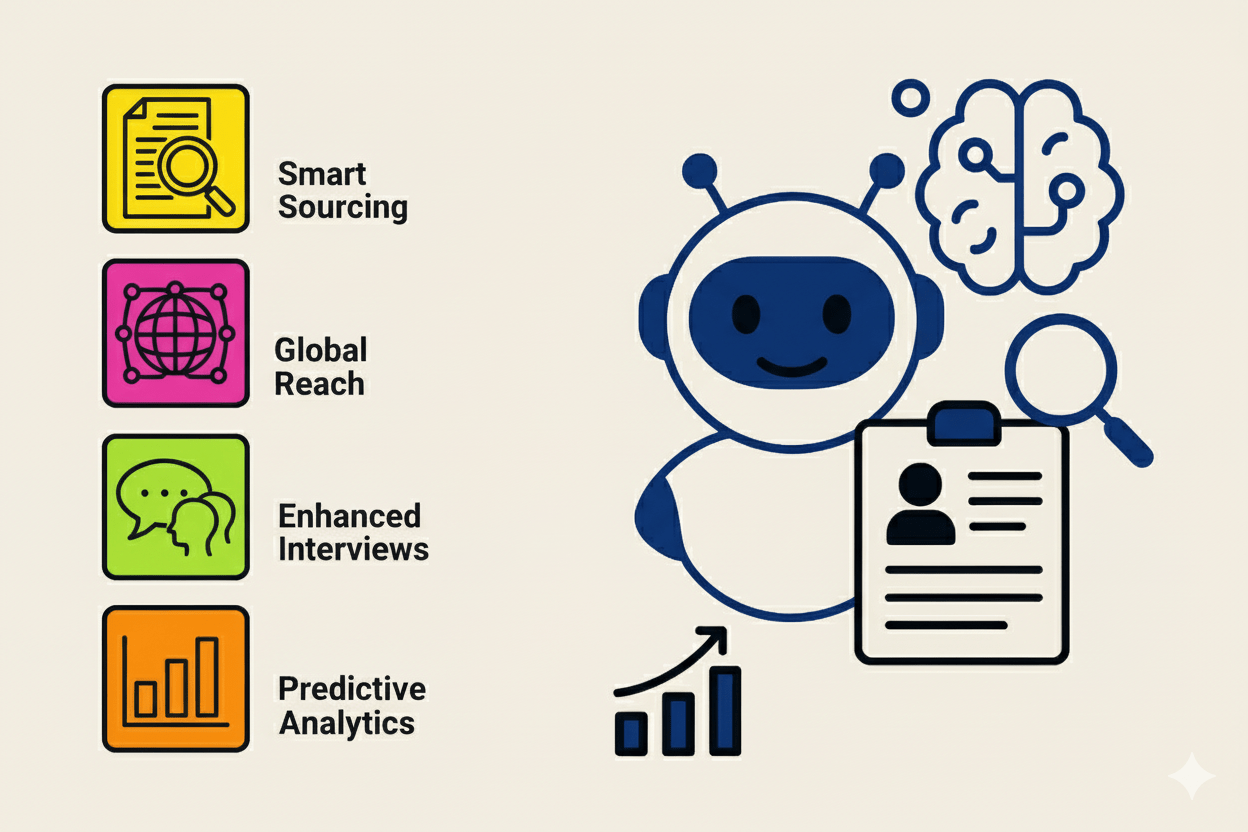
AI interview platforms use video analysis, voice recognition, and NLP to evaluate candidates. These systems can analyze facial expressions, speech patterns, and word choices to assess a candidate’s suitability for a role.
Benefits:
- Consistency: AI ensures that all candidates are assessed using the same criteria, enhancing fairness and reducing bias.
- Data-Driven Insights: AI can provide insights into a candidate’s personality, communication skills, and cultural fit, which are often difficult to gauge through traditional interviews.
- Efficiency: AI-powered interviews can be conducted asynchronously, allowing candidates to complete interviews at their convenience and enabling recruiters to review them later.
Examples:
- HireVue: This platform uses AI to assess video interviews, analyzing facial expressions, tone of voice, and language to predict candidate success.
- MyInterview: MyInterview leverages AI to analyze video interviews, providing recruiters with insights into a candidate’s personality and fit for the role.
3. AI in Candidate Sourcing: Finding the Best Talent
Overview:
Finding the right candidates is a significant challenge for many organizations. AI is helping to streamline this process by identifying and sourcing potential candidates more effectively.
Statistics:
- According to a survey by LinkedIn, 64% of recruiters believe AI has changed how they source candidates.
- Entelo reports that AI-driven candidate sourcing can increase recruiter efficiency by 40%.
How It Works:
AI sourcing tools use algorithms to scan job boards, social media, and other online platforms to identify potential candidates. These tools can assess a candidate’s online presence, work history, and skills to determine their suitability for open positions.
Benefits:
- Broader Reach: AI can search across multiple platforms simultaneously, increasing the pool of potential candidates.
- Passive Candidates: AI can identify passive candidates who are not actively looking for a job but may be open to new opportunities.
- Personalized Outreach: AI can tailor outreach messages based on a candidate’s profile, increasing the likelihood of engagement.
Examples:
- Entelo: This AI-driven sourcing platform uses predictive analytics to identify and engage with potential candidates.
- HiringSolved: HiringSolved uses AI to search and match candidates across various online platforms, providing recruiters with a comprehensive list of potential hires.
4. AI in Candidate Engagement: Building Stronger Relationships
Overview:
Engaging with candidates throughout the recruitment process is crucial for a positive candidate experience. AI is enhancing candidate engagement by providing personalized and timely communication.
Statistics:
- According to Talent Board, companies using AI for candidate engagement see a 30% increase in candidate satisfaction.
- A study by Mya Systems found that AI-powered chatbots can handle up to 75% of candidate inquiries, freeing up recruiters’ time.
How It Works:
AI chatbots and virtual assistants can interact with candidates, answering questions, providing updates, and guiding them through the recruitment process. These tools use NLP to understand and respond to candidate queries in real-time.
Benefits:
- 24/7 Availability: AI chatbots can engage with candidates at any time, providing instant responses and keeping candidates informed.
- Personalization: AI can personalize communication based on candidate data, enhancing the candidate experience.
- Efficiency: By automating routine interactions, AI allows recruiters to focus on more complex tasks and build stronger relationships with candidates.
Examples:
- Mya Systems: Mya uses AI to automate candidate engagement, providing personalized communication and real-time updates throughout the recruitment process.
- AllyO: AllyO’s AI chatbot interacts with candidates via text and email, answering questions and scheduling interviews.
5. AI in Predictive Analytics: Forecasting Hiring Needs
Overview:
Predictive analytics is a powerful application of AI in talent acquisition, enabling organizations to forecast their hiring needs and make data-driven decisions.
Statistics:
- A report by Deloitte found that 42% of companies are using AI for predictive analytics in HR.
- According to Gartner, predictive analytics can improve talent acquisition outcomes by up to 25%.
How It Works:
AI-driven predictive analytics tools analyze historical data and current trends to forecast future hiring needs. These tools can identify patterns and predict the demand for specific roles, helping organizations plan their recruitment strategies.
Benefits:
- Strategic Planning: Predictive analytics provides insights into future hiring needs, allowing organizations to develop proactive recruitment strategies.
- Resource Allocation: By forecasting demand, organizations can allocate resources more effectively, ensuring they have the right talent in place when needed.
- Improved Decision-Making: Data-driven insights help HR leaders make informed decisions about hiring, training, and workforce planning.
Examples:
- Eightfold.ai: This platform uses AI and predictive analytics to forecast hiring needs and identify the best candidates for future roles.
- HiredScore: HiredScore’s AI-driven analytics provide insights into talent trends, helping organizations plan their recruitment strategies.
6. AI in Diversity and Inclusion: Promoting Fair Hiring Practices
Overview:
Diversity and inclusion are critical priorities for many organizations. AI can help promote fair hiring practices by reducing bias and ensuring a more diverse candidate pool.
Statistics:
- According to a report by McKinsey, companies with diverse workforces are 35% more likely to outperform their competitors.
- A study by Harvard Business Review found that AI-driven tools can reduce bias in hiring by up to 30%.
How It Works:
AI tools can analyze job descriptions, resumes, and interview processes to identify and mitigate biases. These tools use algorithms to ensure that all candidates are assessed fairly, regardless of their background.
Benefits:
- Bias Reduction: AI can help identify and eliminate unconscious biases in the recruitment process, promoting fair hiring practices.
- Diverse Candidate Pools: AI can source candidates from diverse backgrounds, ensuring a more inclusive recruitment process.
- Objective Assessment: AI-driven assessments provide objective insights into candidate suitability, reducing the influence of subjective judgments.
Examples:
- Pymetrics: Pymetrics uses AI to assess candidates based on cognitive and emotional traits, promoting fair and unbiased hiring.
- Textio: Textio’s AI tool analyzes job descriptions for biased language, helping organizations create more inclusive job postings.
7. The Future of AI in Talent Acquisition: Emerging Trends
Overview:
As AI continues to evolve, new trends and innovations are emerging in talent acquisition. These advancements promise to further enhance the recruitment process and provide even greater value to organizations.
Emerging Trends:
- AI and Blockchain: The integration of AI and blockchain technology can enhance transparency and security in the recruitment process. Blockchain can verify candidate credentials and work history, while AI can analyze this data to assess suitability.
- AI-Driven Employee Referrals: AI can optimize employee referral programs by identifying the best matches between job openings and potential candidates within an employee’s network.
- AI for Onboarding: AI tools are being developed to streamline the onboarding process, providing new hires with personalized training and resources to ensure a smooth transition.
Examples:
- HireVue’s Blockchain Integration: HireVue is exploring the use of blockchain to verify candidate credentials, enhancing the reliability and security of the recruitment process.
- Teamable: Teamable uses AI to optimize employee referral programs, leveraging employees’ networks to find the best candidates for open roles.
Conclusion: Embracing AI for a Competitive Edge
The future
of talent acquisition lies in the strategic integration of AI technologies. From automating resume screening and enhancing candidate engagement to promoting diversity and leveraging predictive analytics, AI offers numerous benefits that can transform the recruitment process. Organizations that embrace AI in talent acquisition will be better positioned to attract, assess, and hire top talent, gaining a competitive edge in the ever-evolving job market.
References
- LinkedIn. “2021 Global Talent Trends Report.” Link
- Ideal. “How AI Is Changing the Game for Recruiters.” Link
- Deloitte. “AI in HR: A No-Brainer.” Link
- HireVue. “AI and the Future of Hiring.” Link
- McKinsey & Company. “Diversity Wins: How Inclusion Matters.” Link
- Gartner. “Predictive Analytics in Talent Acquisition.” Link
- Pymetrics. “Using AI to Reduce Bias in Hiring.” Link
- Textio. “Augmented Writing for More Inclusive Job Descriptions.” Link
Appendix
For those interested in exploring the AI tools mentioned, here are some recommendations and additional resources:
- Resume Screening: HireVue, Pymetrics
- Candidate Engagement: Mya Systems, AllyO
- Predictive Analytics: Eightfold.ai, HiredScore
- Diversity and Inclusion: Pymetrics, Textio
- Emerging Trends: HireVue’s Blockchain Integration, Teamable
Embrace these AI technologies in your talent acquisition strategy to enhance your recruitment process, promote fair hiring practices, and ensure your organization attracts and retains the best talent.